Finding the right treatment for varicose veins in the vulva starts with a simple question: are they bothering you? Many vulval veins cause little trouble and, if they appeared in pregnancy, often shrink after birth. For veins that ache, swell or make sex painful, options range from support garments to injections, minor surgery and, when the veins are fed from deeper in the pelvis, embolisation. This guide explains each option and how they fit together. For what these veins are and why they happen, see our guide to vulvar varicose veins.
Do vulval varicose veins need treating?
Not always. Treatment is usually for:
- An ache, heaviness or throbbing that affects daily life
- Pain during or after sex
- Veins that are getting bigger, or that persist months after pregnancy
- A clot in a vein (a hard, tender lump), or bleeding after injury
- Distress about how they look
Small veins that cause no symptoms can be left alone. They are rarely dangerous.
First, find out where they come from
Vulval varicose veins can be a purely local problem, or they can be the visible tip of faulty veins deeper in the pelvis. When the ovarian or internal iliac veins leak backwards, blood can escape through “escape points” in the groin and pelvic floor and fill the vulval veins.
This matters because treating only the surface veins, when a pelvic source is still pumping blood into them, makes it more likely they will come back. So before any procedure, especially outside pregnancy, a duplex ultrasound is usually done. It may include the legs, the groin and the pelvis, sometimes with a probe inside the vagina. Our guide to the pelvic venous ultrasound explains what to expect.
If you also have a dull pelvic ache that worsens with standing, the veins may be part of pelvic congestion syndrome.
Self-care and vulvar varicose veins support garments
For many women, simple measures are enough, or they help while you decide on treatment.
- Support garments. Compression shorts, cycling-style shorts, firm support underwear or, in pregnancy, a support belt with a groin strap can press gently on the veins and ease the ache. Ordinary leg stockings do not reach the vulva.
- Breaks from standing. Sit or lie down during long days on your feet. Lying with your hips raised on a pillow for 10 to 15 minutes often eases the heaviness.
- Cool packs. A wrapped cold pack can calm throbbing or swelling.
- Comfortable clothing. Avoid very tight waistbands or jeans that press on the groin.
- Care with hair removal. Shave or wax carefully over the veins to avoid cuts.
- Sex. Extra lubrication and different positions can help if sex is painful.
These steps relieve symptoms but do not make the veins disappear. Some doctors also suggest venoactive tablets, but the evidence for vulval veins is limited, so ask before trying any medicine.
Sclerotherapy
Sclerotherapy is the most commonly used procedure for vulval varicose veins. A fine needle is used to inject a medicine, often mixed into a foam, into the veins. It irritates the vein lining so the vein seals shut and is slowly absorbed by the body.
- It is usually done in a clinic or day-procedure room, often guided by ultrasound.
- It needs no general anaesthetic and you can usually go home the same day.
- More than one session may be needed.
- Common effects include bruising, tenderness and lumpiness while the veins settle. Rarely, a clot can form in a deeper vein.
Many specialists favour sclerotherapy for vulval veins because they are thin-walled and respond well to it. When it is used alone, treating the escape points at the same time can help.
Removing the veins (phlebectomy)
Larger, bulging veins can be removed through tiny cuts under local or general anaesthetic. This is called phlebectomy. It removes the veins straight away, but there is more bruising and swelling than after sclerotherapy, and occasionally bleeding into the tissues (a haematoma) can occur. The vulva has a rich blood supply, so this is done carefully by an experienced team.
Treating the pelvic source: embolisation
If a scan shows that refluxing pelvic veins are feeding the vulval veins, and especially if you also have pelvic pain, treating the source first may make sense. This is often called a “top-down” approach.
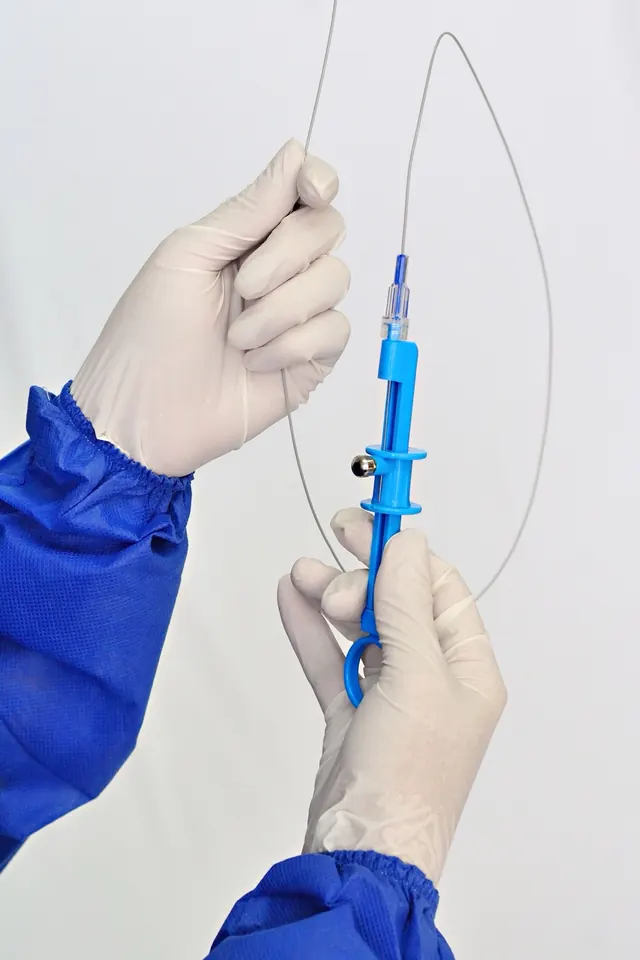
In embolisation, a specialist passes a thin tube through a vein in the groin or neck and closes the faulty ovarian or pelvic veins from the inside with coils, plugs or foam. It is usually a day procedure. Read more in our guide to ovarian vein embolisation, and see recovery after embolisation.
Some teams then treat any remaining vulval veins with sclerotherapy, either in the same session or a few weeks later. Others start “bottom-up”, treating the vulval veins and escape points directly and only moving to embolisation if symptoms persist. Both approaches are used, and small studies suggest both can help. If you have visible veins but no pelvic pain, direct sclerotherapy alone is often preferred.
A Singapore vascular surgeon’s guide to care after embolisation or sclerotherapy gives a practical overview of the days after treatment.
Treatment in pregnancy
Vulval varicose veins are common in pregnancy and often improve within a few months of birth. Procedures are usually delayed until after pregnancy, and often until a few months after birth, to see how much the veins settle. Support garments, rest and cool packs are the mainstays until then.
Most women with vulval veins can still have a vaginal birth. Our guide to vulvar varicose veins in pregnancy covers this in detail. If you plan more children, it is worth discussing timing, because a future pregnancy can bring veins back.
Can they come back?
Yes. Vulval varicose veins can recur after any treatment, particularly:
- After another pregnancy
- When a pelvic source was not found or not treated
- When only some of the veins were treated
Reported recurrence rates vary widely, because studies are small and define recurrence differently. Most evidence for every option comes from small case series, and there are no large trials comparing them. A good team will explain this honestly and plan follow-up.
Questions to ask before treatment
- Could my vulval veins be coming from my pelvic veins? Do I need a scan first?
- Which option do you suggest, and why that one for me?
- How many sessions might I need, and what is the recovery like?
- What are the chances they come back, and what happens then?
- Should I wait if I plan another pregnancy?
When to see a doctor
See a doctor if vulval veins are painful, getting bigger, affecting sex, or still present several months after pregnancy, or if you also have a dull pelvic ache that worsens with standing. Always get a new vulval lump checked, as not every lump is a vein. Our pelvic symptom check can help you prepare.
Get urgent medical help for heavy bleeding from a vein that does not stop with firm pressure, a hot, swollen, painful leg, sudden breathlessness or chest pain, or sudden severe pelvic pain. In Singapore, call 995 in an emergency.
Frequently asked questions
How do you treat varicose veins in the vulva?
Mild veins are managed with self-care and support garments. Troublesome veins can be closed with sclerotherapy injections or removed through tiny cuts. If a scan shows pelvic veins are feeding them, the pelvic source may be treated with embolisation, sometimes in the same session as sclerotherapy.
Do support garments help vulvar varicose veins?
They can ease the heavy, aching feeling and swelling, especially on long days on your feet. Options include pregnancy support belts with a groin strap, compression shorts or cycling shorts, and firm support underwear. They relieve symptoms but do not make the veins go away.
How are vulvar varicose veins treated when not pregnant?
Outside pregnancy, vulval varicose veins often come from refluxing pelvic veins. A duplex ultrasound is usually done first. Depending on the result, treatment may be sclerotherapy of the vulval veins, embolisation of the pelvic veins, or both.
Can varicose veins in the labia come back after treatment?
Yes. New veins can form over time, especially after another pregnancy or if a pelvic source was not treated. Rates vary widely between studies. Ask your specialist how likely it is in your case and what follow-up they offer.
Can vulval varicose veins be treated during pregnancy?
Procedures are usually avoided in pregnancy, because the veins often shrink after birth. Support garments, rest with the hips raised and cool packs are the mainstays until then.
Sources and further reading
- Interventional treatment of labial varices. Semin Intervent Radiol 2023
- Pelvic venous disorders: an update in terminology, diagnosis, and treatment. Semin Intervent Radiol 2023
- Bottom-up treatment for vulvar and lower extremity varicose veins of pelvic origin: a case report. EJVES Vasc Forum 2025
- Ovarian vein embolization with adjunctive local sclerotherapy in women with vulvar varicosities. Front Surg 2026
- Large vulvar haematoma after vulvar phlebectomy and ovarian vein embolization: a case report. Case Rep Womens Health 2020
This article is general information, not personal medical advice. Please speak to a doctor about your own symptoms. How we create our content.