Most varicose veins start in the legs. But varicose veins on buttocks, in the buttock crease, on the back or inner side of the thigh, or on the vulva often have a different source: refluxing veins inside the pelvis. Knowing this matters, because treating the leg veins alone may not stop them coming back. This guide explains how pelvic veins reach the leg, the clues to look for, and how these veins are checked and treated.
How pelvic veins feed leg veins
Normally, blood in the leg veins flows up towards the heart, helped by one-way valves. Typical leg varicose veins happen when valves fail in the main surface veins of the leg, the great and small saphenous veins.
The pelvic veins are a separate network around the womb, ovaries, bladder and rectum. They drain upwards through the ovarian veins and the internal iliac veins. When these veins widen and their valves fail, blood flows backwards and pools in the pelvis. This is the problem behind pelvic congestion syndrome.
That pooled blood looks for a way out. It can leave the pelvis through a few natural connections, often called escape points, and fill veins on the outside of the body:
- Perineal and vulval veins, between the legs
- Inguinal veins, in the groin
- Gluteal veins, in the buttock
- Obturator veins, on the upper inner thigh
From these points, the backward flow runs down into veins on the buttock, the back of the thigh or the inner thigh, and sometimes further down the leg. Doctors call these pelvic origin varicose veins.
Where they show up
Veins fed from the pelvis tend to appear in places that ordinary leg varicose veins do not:
- On the buttocks or in the crease under the buttock
- On the back of the thigh, often running down from the buttock
- High on the inner thigh, close to the groin
- On the vulva or perineum. See vulvar varicose veins.
They often look like a network of veins that does not follow the usual line of the main leg veins. Some women also have an ache in the pelvis that is worse after standing, pain during or after sex, or heaviness in the upper thighs.
In pregnancy, the pelvic veins carry much more blood and widen, so veins on the buttocks and vulva are fairly common. Many shrink after birth. See vulvar varicose veins in pregnancy.
Men can have pelvic-origin leg veins too, although this is less common and less studied.
Recurrent varicose veins: a clue
Varicose veins can come back after treatment for many reasons, including new vein growth and veins left untreated. A missed source in the pelvis is one of them.
In a UK study of women with leg varicose veins, about 1 in 5 had faulty veins coming from the tummy or pelvis rather than from the usual leg veins, and about 1 in 6 had confirmed pelvic vein reflux. Pelvic reflux is reported to be more common in women who have had children and in those whose leg veins have returned after surgery.
Clues that the pelvis may be involved include:
- Veins that came back within a few years of treatment
- Veins on the buttock, back of the thigh, inner thigh or vulva
- Having had two or more pregnancies
- Pelvic aching, especially after standing
If this sounds familiar, it is reasonable to ask whether your pelvic veins have been checked. A Singapore vascular surgeon’s article on whether varicose veins come back discusses other reasons too.
How it is assessed
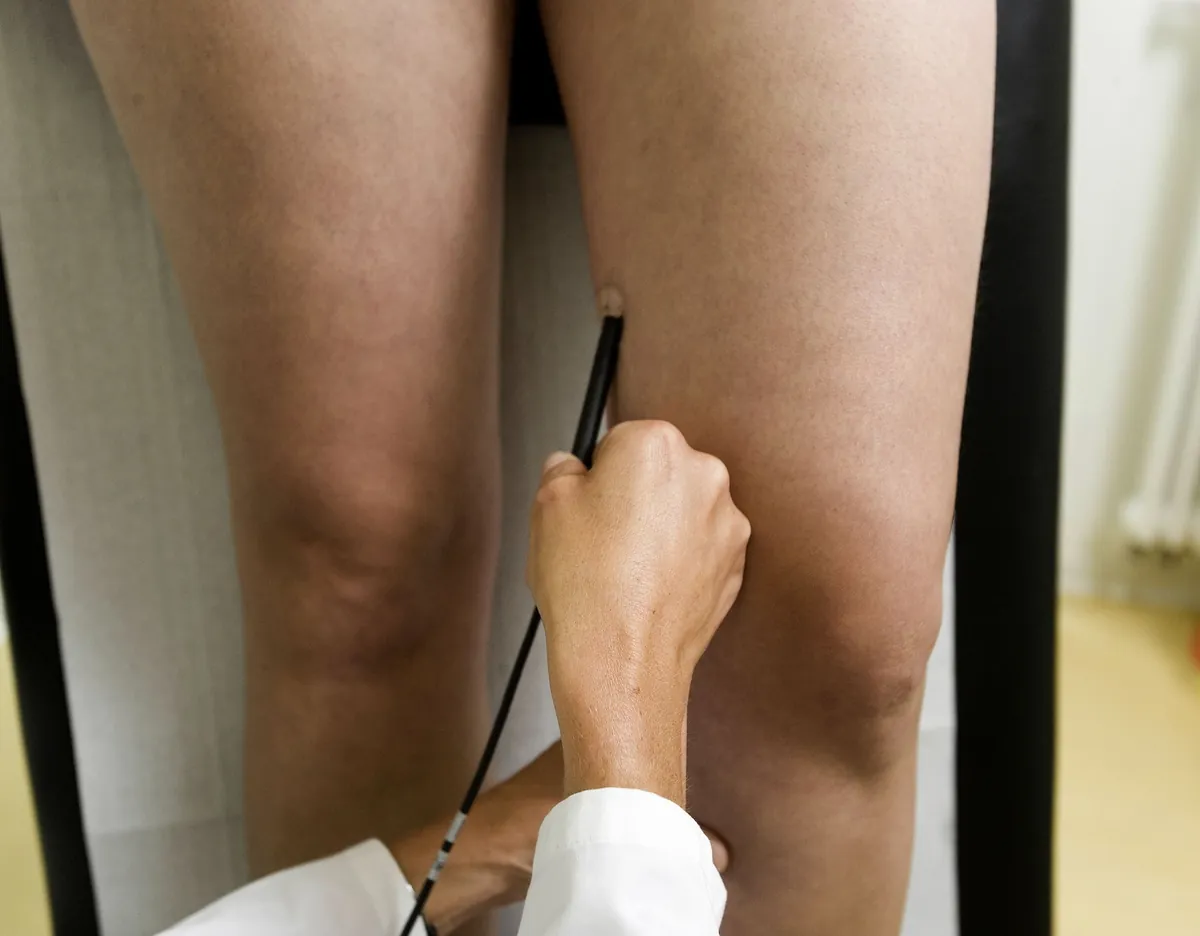
Leg duplex ultrasound. A scan of the leg veins, done standing, shows which veins are faulty and where the backward flow starts. If refluxing veins are traced up to the groin, vulva or buttock rather than to the main leg veins, a pelvic source is suspected.
Pelvic duplex ultrasound. A scan, often through the vagina as well as the tummy, looks at the ovarian and internal iliac veins and the veins around the womb. See our guide to the pelvic congestion syndrome ultrasound.
Further imaging. CT or MR venography, or a catheter venogram, may be used to map the veins before treatment.
Doctors may describe your findings using the CEAP system for leg veins and the newer SVP system for pelvic veins. Our page on pelvic venous disorders explains these in plain words.
Treatment: top-down or bottom-up?
There are two broad approaches, and specialists do not all agree on which is better.
Top-down. The pelvic source is treated first, usually by closing the faulty pelvic veins from the inside with ovarian vein embolisation. The leg and vulval veins are then treated with sclerotherapy, removal through small nicks (phlebectomy) or other methods. In one UK series of 218 women with pelvic-origin leg veins, embolisation was done before leg treatment, and a small number needed a repeat embolisation.
Bottom-up. The visible leg veins are treated first. The pelvic veins are treated only if there are pelvic symptoms or the leg veins keep coming back.
Which suits you depends on:
- Whether you have pelvic symptoms as well as leg veins
- How much the veins bother you
- Whether veins have already come back after treatment
- Your plans for future pregnancy, which can bring pelvic reflux back
The evidence is limited. The European Society for Vascular Surgery’s 2022 guideline gives only a cautious recommendation for treating pelvic veins in people with pelvic-origin leg veins and pelvic symptoms. If you have no pelvic symptoms, many specialists treat the leg veins alone and watch.
For general information on leg varicose veins and their treatment, see our sister site’s guides to varicose veins and varicose vein treatments compared.
Can pelvic congestion cause leg swelling?
Pelvic congestion more often causes heaviness and aching in the upper thighs than true swelling. Marked swelling, especially of one leg, points to other causes, such as a deep vein clot or a squeezed iliac vein (May-Thurner syndrome). Swelling of both legs can also come from heart, kidney or medicine-related causes, so it should be checked by a doctor.
When to see a doctor
See a doctor if you have varicose veins on the buttocks, back of the thigh, inner thigh or vulva, veins that have come back after treatment, or pelvic aching that is worse after standing. Our pelvic symptom check can help you prepare.
Get urgent medical help if a leg becomes suddenly swollen, painful, warm or red, if you have sudden breathlessness, chest pain or cough up blood, or if a varicose vein bleeds heavily. Raise the leg and press firmly on a bleeding vein while you get help. In Singapore, call 995 in an emergency.
Frequently asked questions
What causes varicose veins on the buttocks?
Visible veins on the buttock or in the buttock crease are often fed from inside the pelvis, through veins that leave the pelvis near the buttock muscles. Reflux in the internal iliac or ovarian veins is a common source. They can also come from leg veins, so a scan is needed to tell.
Why do I have varicose veins on the back of my thigh?
Veins on the back of the thigh can come from the small saphenous vein in the calf, from other leg veins, or from pelvic veins escaping through the buttock or perineum. A duplex scan done standing shows where the faulty flow starts.
Are varicose veins on the buttocks in pregnancy normal?
They are fairly common in pregnancy, because the pelvic veins widen and carry much more blood. Many shrink in the months after birth. If they persist or ache, ask for an assessment.
Can pelvic congestion cause leg swelling?
Pelvic congestion more often causes heaviness and aching in the upper thighs than true swelling. Marked swelling of one leg suggests another cause, such as a blood clot or a squeezed iliac vein (May-Thurner syndrome), and should be checked promptly.
Why do varicose veins come back after surgery?
Common reasons include new veins growing at the treatment site, veins that were not treated the first time, and a source that was missed. In women who have had children, reflux from the pelvis is one of the sources that can be missed, so a pelvic scan may be worth asking about.
Sources and further reading
- Marsh P et al. Pelvic vein reflux in female patients with varicose veins: comparison of incidence between a specialist private vein clinic and an NHS district general hospital. Phlebology 2009
- Ratnam LA et al. Pelvic vein embolisation in the management of varicose veins. Cardiovasc Intervent Radiol 2008
- Barros FS et al. A comprehensive ultrasound approach to lower limb varicose veins and abdominal-pelvic connections. J Vasc Surg Venous Lymphat Disord 2024
- De Maeseneer MG et al. ESVS 2022 Clinical Practice Guidelines on the Management of Chronic Venous Disease of the Lower Limbs. Eur J Vasc Endovasc Surg 2022
- NICE CG168 — Varicose veins: diagnosis and management
This article is general information, not personal medical advice. Please speak to a doctor about your own symptoms. How we create our content.